
Verizon
Evolving the Sports experience on Fios TV
In design stage - Limited visuals have been shared
Overview
Sports is one of the primary drivers of engagement for Verizons Fios TV, with a large portion of users actively watching live sports. Despite this, the experience is currently buried within a second-level page and presents sports content in the same way as general TV programming, resulting in low discoverability and limited relevance for sports fans.
The current sports experience is underutilised, with only around 2% of active users engaging with the dedicated sports page.
This project focuses on rethinking the sports experience to better serve different types of sports viewers and improve access to live and personalised content.
Problem
Sports is a core value proposition for Fios TV, particularly as live sports content is less available on streaming platforms. However, the current experience introduces friction rather than reducing it.
Key issues identified:
Low discoverability: Sports content is hidden behind a second-level page, making it difficult for users to access quickly.
Generic content structure: Sports is treated like standard TV programming, meaning key metadata (teams, schedules, context) is not surfaced effectively.
Underutilised data: The product receives rich sports data from multiple sources, but this is not structured or presented in a way that benefits the user.
Lack of personalisation: Despite a large proportion of users being sports fans, the experience does not adapt to user preferences or viewing behaviour.
Competitive landscape
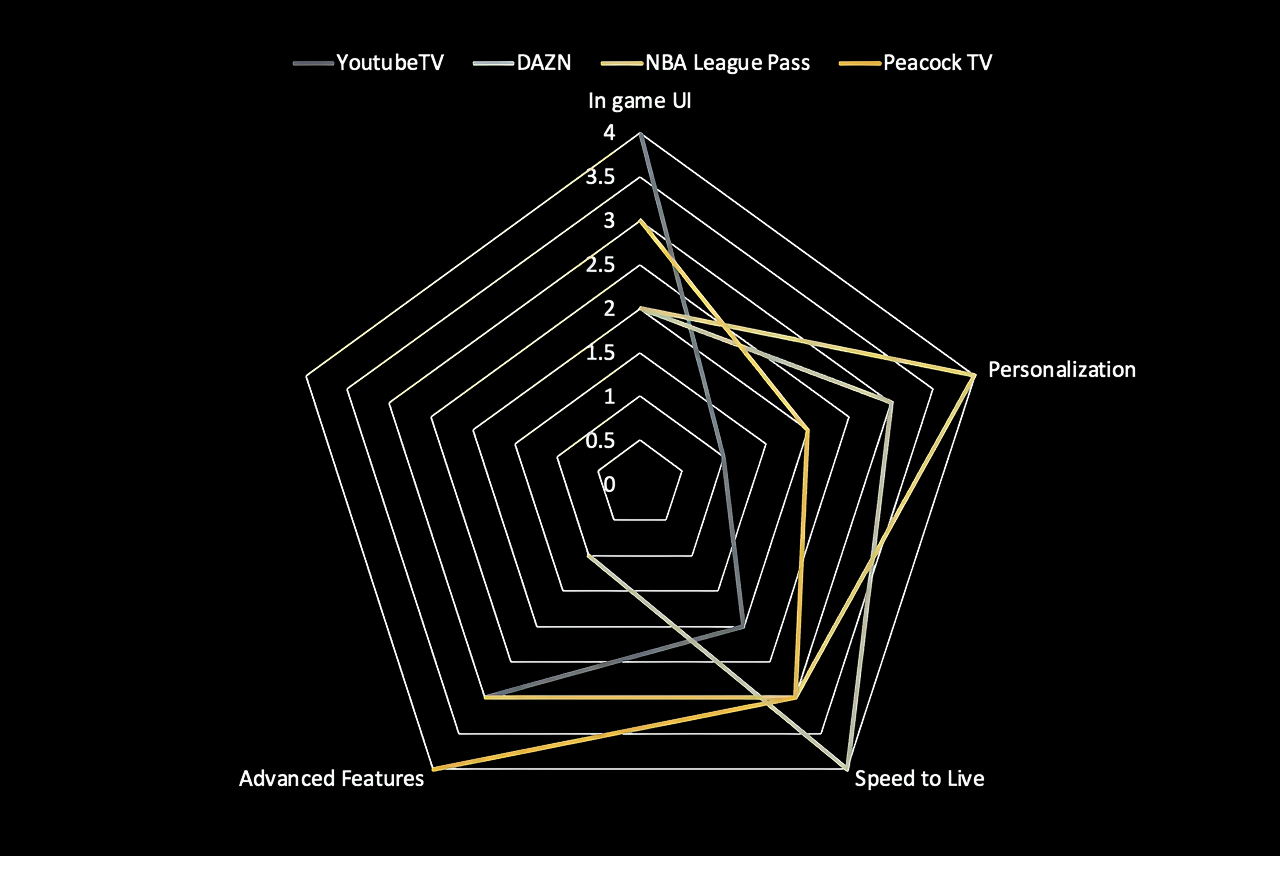
To understand how sports experiences are evolving, i analysed competitors across key benchmarks like personalisation, speed to live content and in-game experience.
We found that competitors had fan-controlled personalisation where user could explicitly tell the product what they like and who they followed. They also had smart ways of displaying shoulder content like sports news and talk shows in a way that felt intuitive, not forced.
The biggest opportunities of improvement were adding personalisation features, creating a smoother and more efficient journey to sports consumption and surfacing sports as a primary destination.
Goal
Increase discoverability of sports content
Reduce friction in key actions such as finding games, recording, and setting reminders
Introduce meaningful personalisation
Create a scalable sports experience that supports different user types (fanatic, enthusiast, casual)
My role
I worked as a design lead in collaboration with the client’s program director, defining the experience direction for a new sports offering as part of a broader product evolution.
Defining the Opportunity
We conducted a kick off workshop in New York with the client in person to get their insights into key areas they wanted to look at as part of this project.
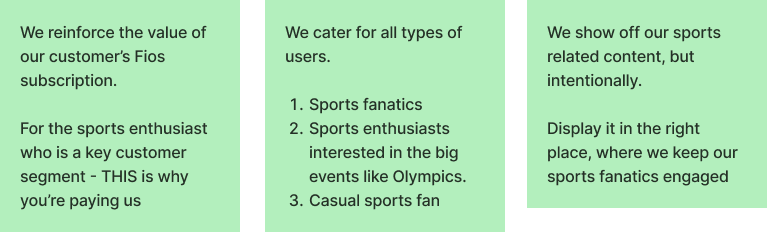
We gained insight into the clients hopes for this project. They wanted to start treating sports as sports and if this meant creating new patterns and UI, then thats what we’ll do. They hoped shoulder content like sports talk shows and documentaries would also become more discoverable.
They also hoped that we would cater to all three types of sports consumers, the fanatic, the enthusiast an the casual fan:
We ran an in-person workshop with stakeholders to align on the ambition for the sports experience.
Key outcomes:
Treat sports as a distinct content type, not as standard TV and be open to introducing new patterns if needed
Improve discoverability of both live events and shoulder content
Support different levels of fan engagement (fanatic, enthusiast, casual)
This created alignment to move beyond incremental changes and rethink the experience more holistically.
Creating a Dedicated Sports Hub
One of the first decisions was to move sports into the main navigation. Currently, Sports lived ina a secondary page with no real entry point. The new approach was to introduce another navigation item for Sports to centralise othe curated sports content that we alreayd had, as well as personalsied rails. This was critical in improving discoverability, establishing Sports as a primary use case and creating a space for future enhancements.

Enabling Personalisation with following teams
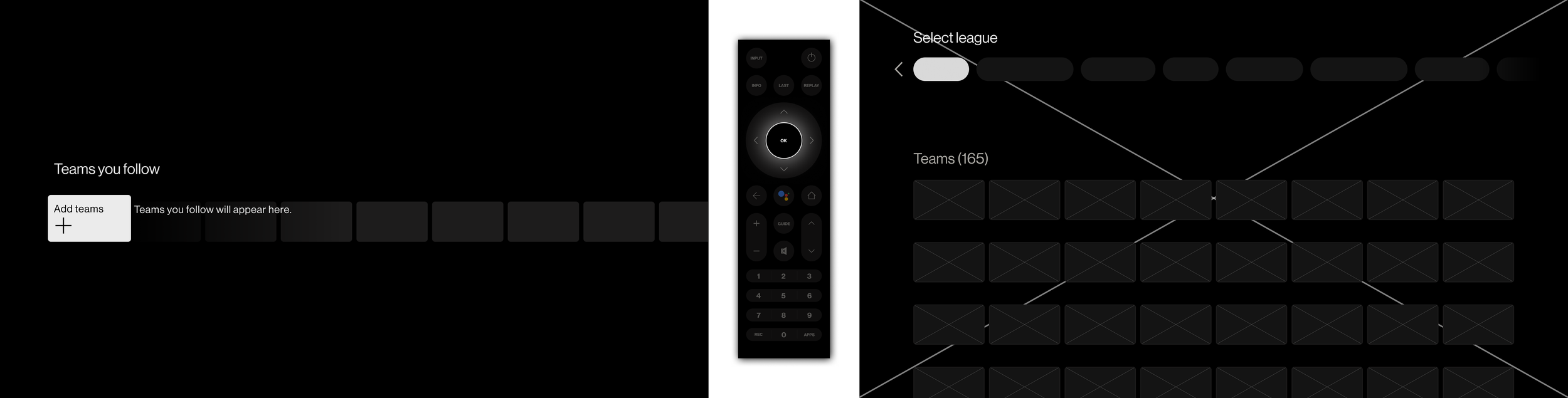
A key gap was the lack of explicit user preferences. To solve this, I introduced a “follow team” flow where users are prompted through empty states to select teams via search and filtering. This integrates with existing system capabilities and unlocks a level of personalised content.
Using this information to improve key user flows
We knew that highly engaged users track every game and we needed to use the information about followed teams to show content that felt convenient and automated. From this foundation, I focused on improving core sports behaviours.
Improving key user flows:
Schedules

Improving key user flows:
Team-based actions
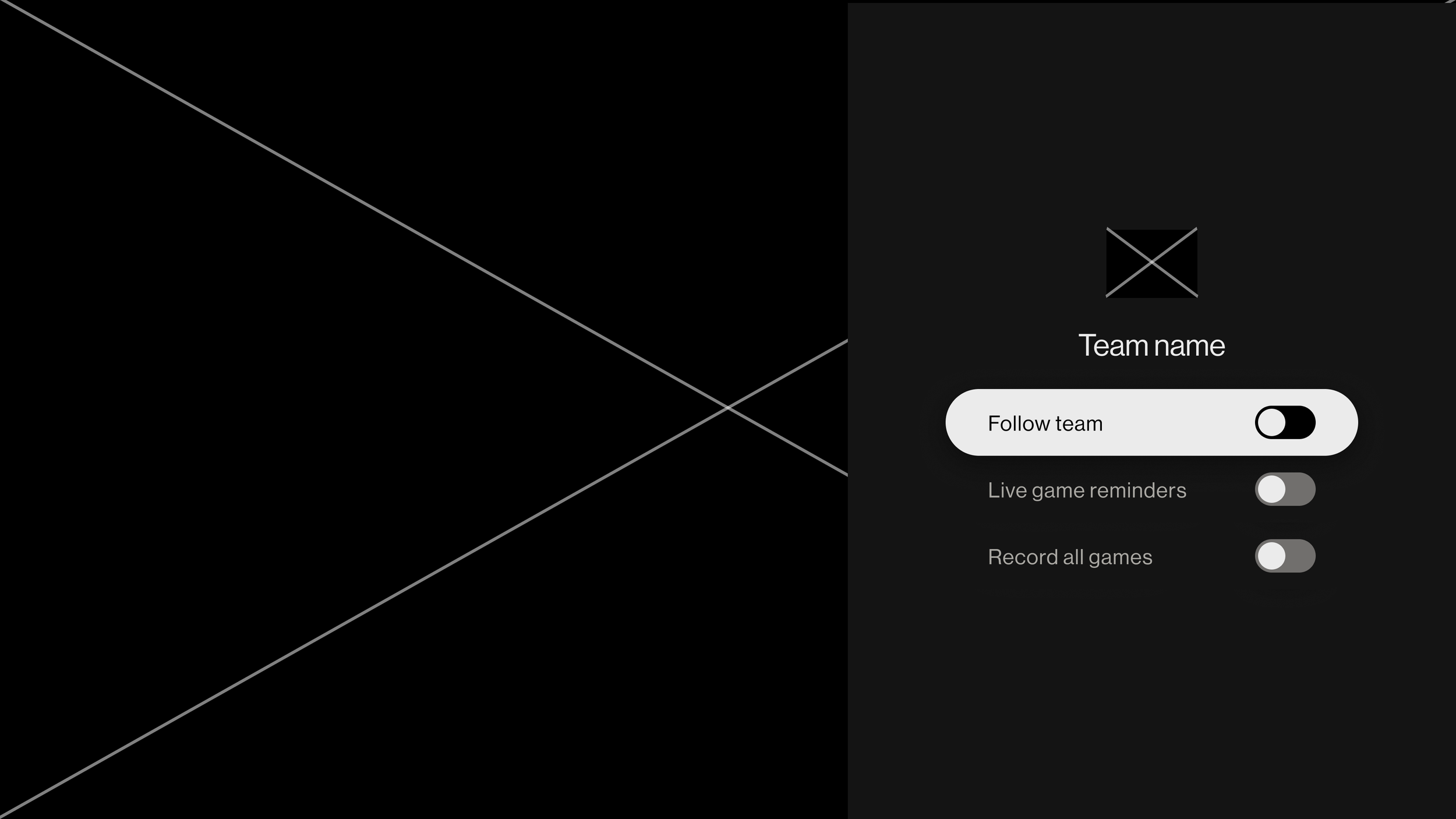
I also looked at key actions the user could take for a team the follow. Actions like recording all games for a team and setting reminders for upcoming matches was an essential addition.
Re -thinking Sport event pages
Sports pages were displayed when the user selected a game or event. The initial approach for these pages reused existing TV series page patterns.
This created issues with sports content as there was low content density within tabs, unnecessary navigation between sections and poor alignment with sports consumption patterns
The initial concept was a tab-based structure (airings, past events, teams, shoulder content) which could use the same components as we currently had built. Feedback for this concept showed limited value in separate tabs due to the lack of substantial content and low engagement with some content types like ‘past events’.
I then changed the final direction to a more flattened version, breaking out content from each tab into one page. Key actions are surfaced at the top with all content presented as rails. This made all relevant information visible at a glance.
This improved discoverability as content wasn’t hidden in tabs, scanning behaviour and overall flow through the experience
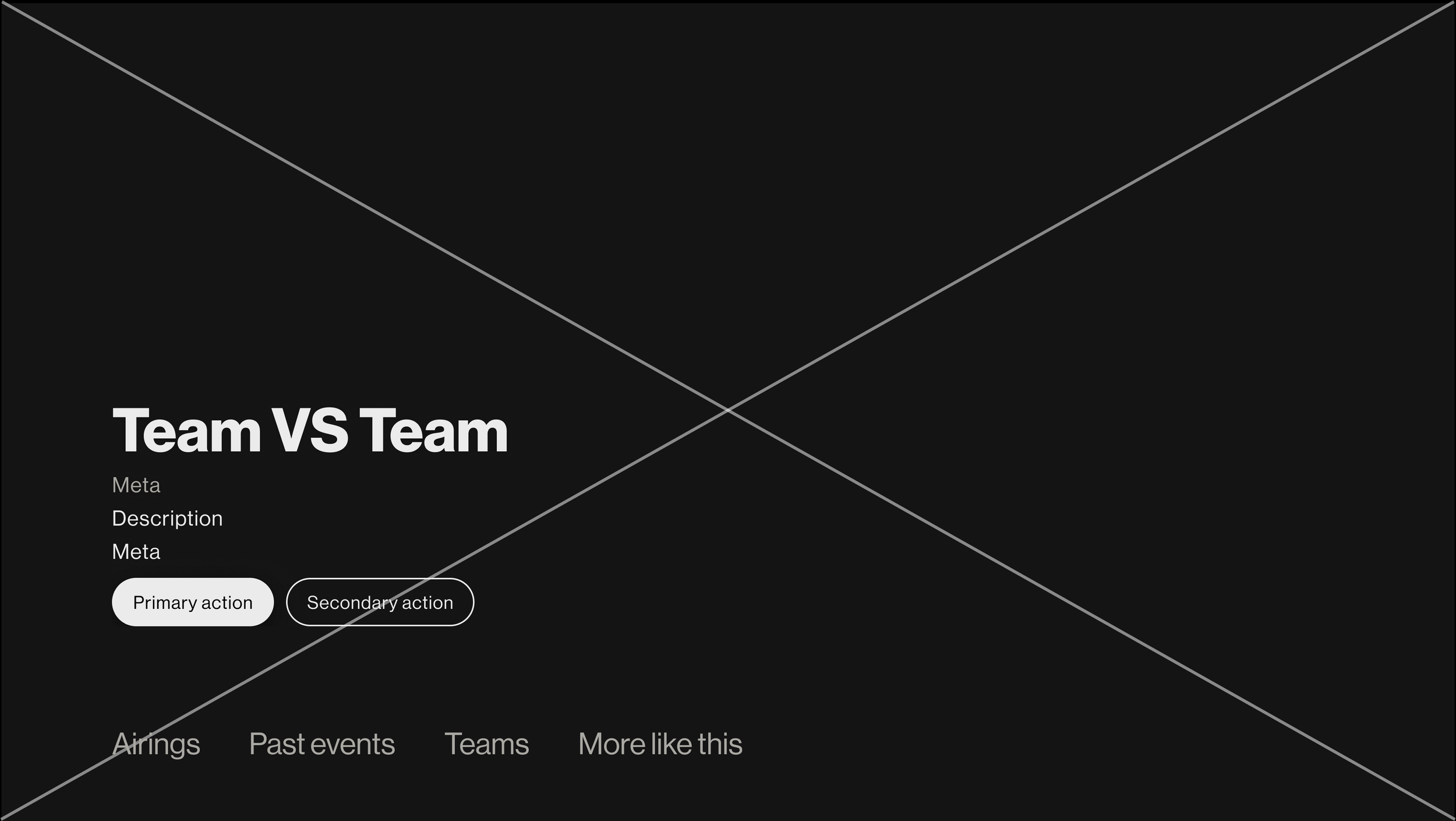
Version 1
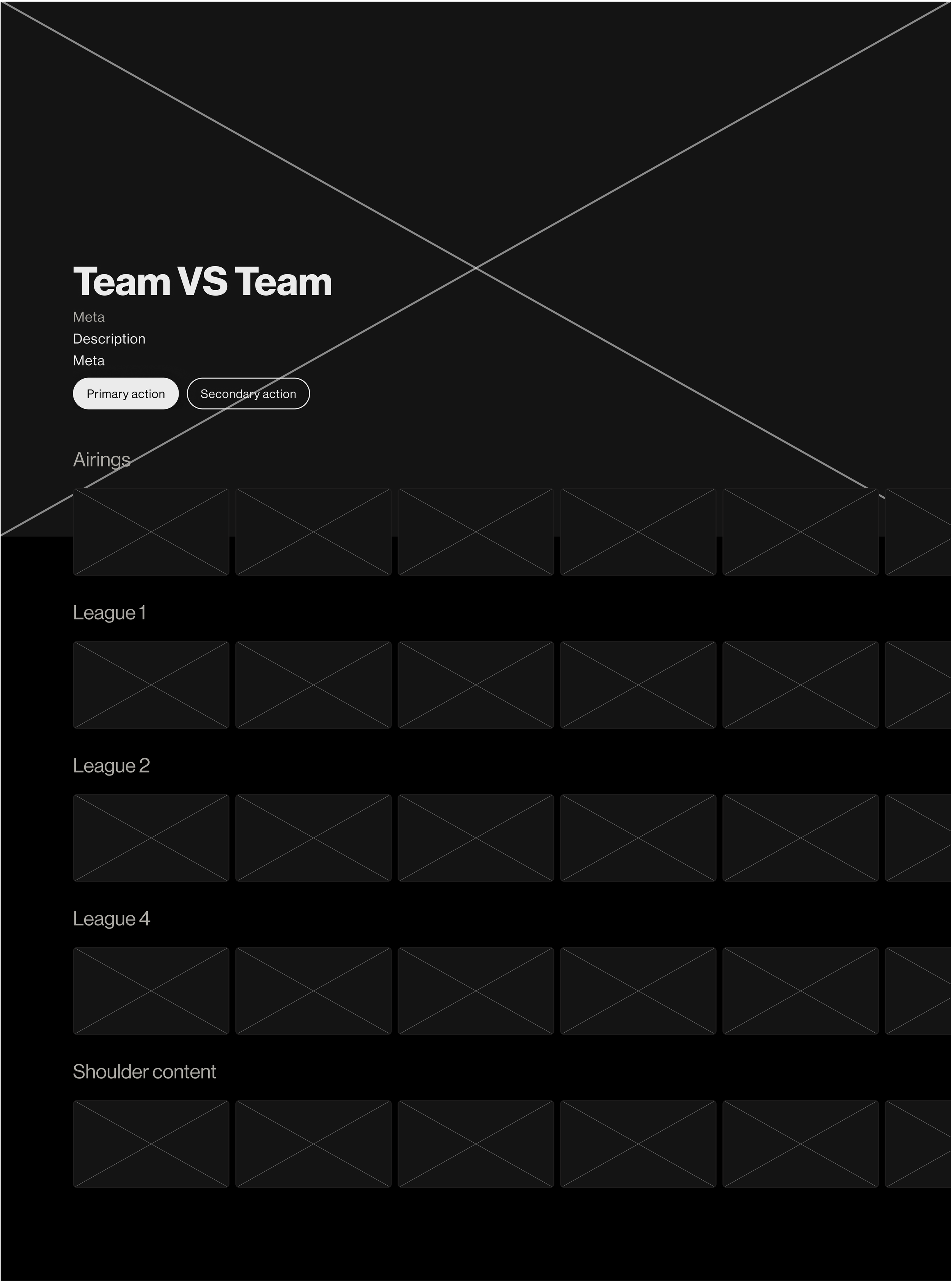
Version 2
Systems thinking
I also manage and govern the cross platform design system, so i always have the system in mind when designing. Throughout the work, I focused on defining reusable patterns and templates like rails, cards, actions and designing solutions that could scale beyond sports. This ensured the work contributed not just to a feature, but to the broader product system.
Current status
This work is complete and on hold for a future release. Final UI designs cannot be shared, but the core experience direction, flows, and structure have been defined and are being iterated on with stakeholders.